Protein Check/learn/leucine muscle growth
What is leucine and why does it matter for building muscle?
By Raj Lakhani · Published June 14, 2026 · 3 min read
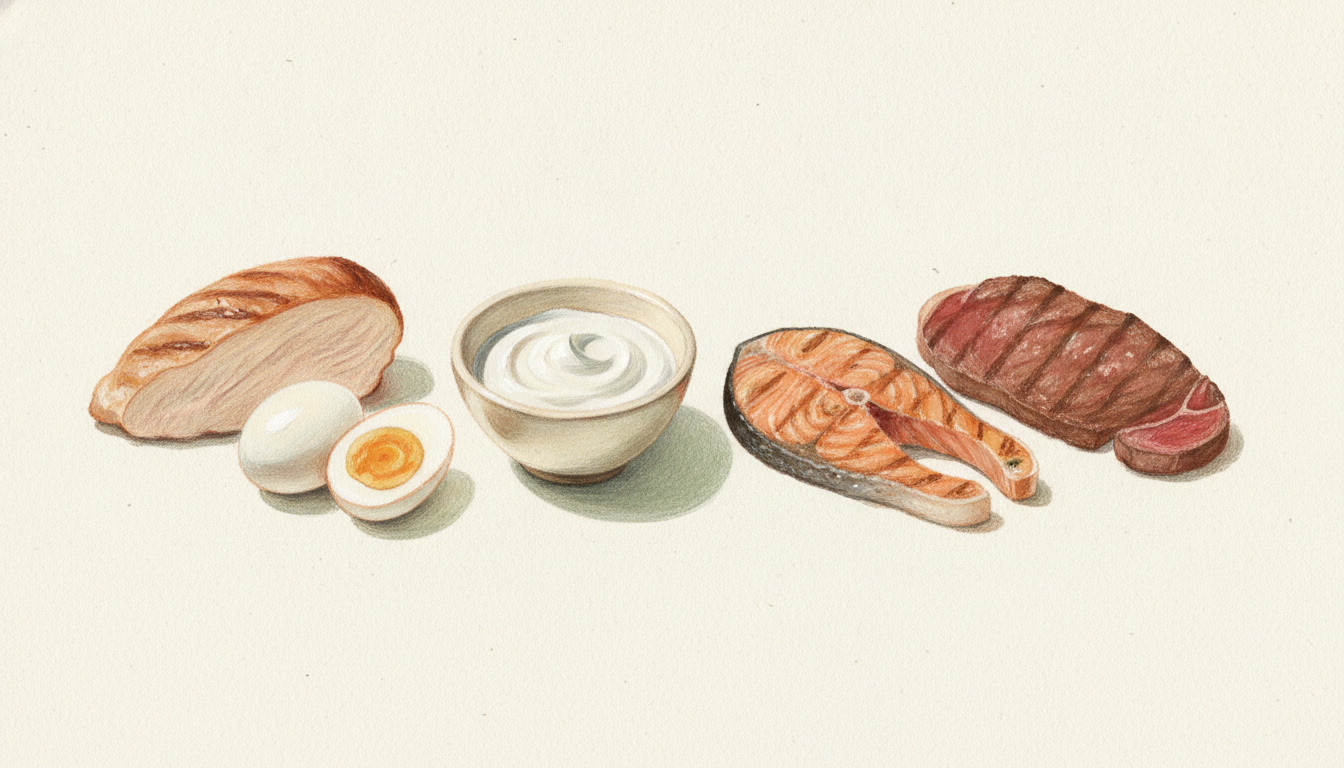
Leucine is a crucial amino acid that acts like a switch for muscle growth. It specifically activates the mTOR pathway, which signals your body to start building and repairing muscle tissue. To effectively kickstart this process, aim for about 2.5 to 3 grams of leucine in a protein-rich meal.
- 2.5-3 gLeucine per meal
- 20-40 gProtein per meal
- Chicken breast100 g cooked31 g
- 1 large egg1 egg6 g
- Firm tofu100 g9 g
- Greek yogurt100 g10 g
- Lentils1/2 cup cooked9 g
- Peanut butter1 tbsp4 g
Leucine: The Muscle-Building Signal
So, what is leucine? It's one of the three branched-chain amino acids (BCAAs), and it's essential, meaning your body can't make it. You have to get it from food. Think of leucine as the master key that unlocks your body's ability to build and repair muscle protein. It's the most powerful of all amino acids for this job.
Why Leucine Matters: Flipping the mTOR Switch
Leucine is special because it directly activates a pathway called mTOR (mammalian Target of Rapamycin). This mTOR pathway is essentially your body's "on" switch for muscle protein synthesis – the process where your body uses protein to build new muscle tissue. Without enough leucine, that switch stays off, or at least dimmed.
Hitting about 2.5 to 3 grams of leucine in a meal is the sweet spot to really flip that switch on. This is why getting enough protein isn't just about total grams; it's also about hitting that leucine threshold. It's the critical signal that tells your muscles, 'Time to grow!'
Getting Your Leucine Dose: Protein Sources
To hit that 2.5-3 gram leucine target, you generally need around 20-40 grams of high-quality protein in a meal. Animal proteins like chicken, beef, fish, eggs, and dairy are rich in leucine. For example, 100 grams of chicken breast gives you about 31 grams of protein, which easily provides enough leucine. A large egg has about 6 grams of protein.
Plant-based proteins can also get you there, but you might need slightly larger portions or a mix of sources. For instance, firm tofu has about 9 grams of protein per 100 grams, and a half-cup of cooked lentils also has around 9 grams. Combining different plant proteins helps ensure you get a full amino acid profile, including enough leucine. Don't stress over exact leucine counts for every food; focus on consistently eating protein-rich meals.
Remember: Leucine: your muscle's personal on-off switch.
Related guides
Want to know how much protein is actually on your plate? Snap a photo and the free Protein Check estimates the protein and leucine in seconds — no signup.
What are leucine benefits beyond muscle building?
While famous for muscle, leucine also plays a role in energy regulation and maintaining muscle mass as you age. It helps prevent muscle breakdown, which is important for overall strength and mobility. It's not just for bodybuilders; it's key for healthy aging too.
Can I get too much leucine?
For healthy individuals, getting leucine through whole foods is generally safe. Extremely high doses from supplements, far beyond what you'd get from food, could theoretically interfere with other amino acid absorption, but this is rare with a balanced diet. Stick to food first.
Do plant proteins have enough leucine for muscle growth?
Yes, plant proteins can absolutely provide enough leucine for muscle growth, but you might need larger portions or a wider variety to hit the 2.5-3 gram target. Combining different plant sources like legumes, grains, nuts, and seeds throughout the day ensures you get a complete amino acid profile, including sufficient leucine.
Sources
- International Society of Sports Nutrition — protein & exercise position stand
- MedlinePlus (U.S. National Library of Medicine) — Dietary proteins
Written by Raj Lakhani, who builds Protein Check. Researched with AI assistance and fact-checked against the public, authoritative sources listed above — see how these guides are made. General information, not medical or dietary advice. Numbers are estimates; talk to a professional for advice specific to you.