Protein Check/learn/daily protein
How much protein do I need a day?
By Raj Lakhani · Published June 14, 2026 · 1 min read
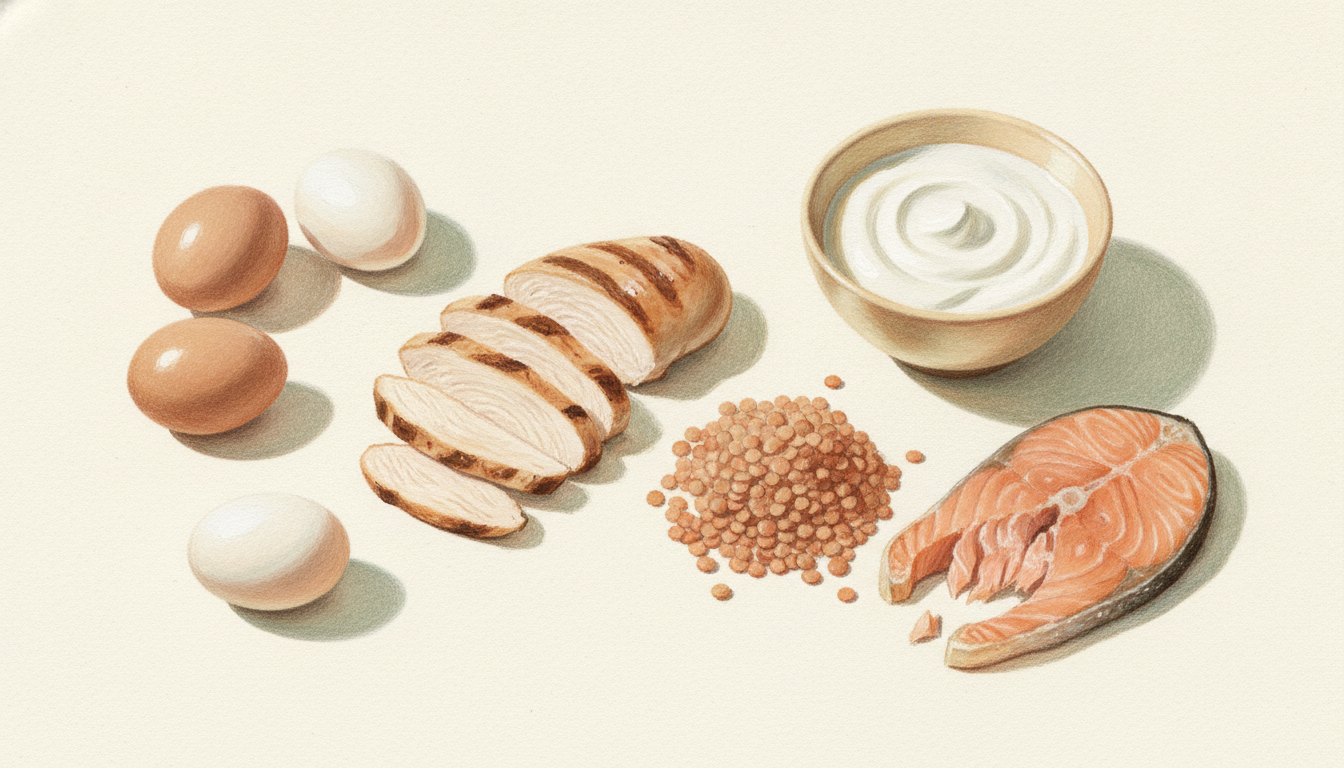
Sedentary adults require 0.8 grams of protein per kilogram of body weight daily. To build or retain muscle, aim for 1.6 grams per kilogram (0.7 grams per pound) daily.
- 0.8 g/kgSedentary adult
- 1.6 g/kgMuscle building/retention
- 20-40 gPer meal target
- Chicken breast100 g cooked31 g
- Large egg1 large6 g
- Greek yogurt100 g plain10 g
- Lentils1/2 cup cooked9 g
Benefits of Higher Protein Intake
The 1.6 g/kg protein target supports muscle repair and growth, crucial for active individuals, weightlifters, and age-related muscle maintenance. Higher protein intake also increases satiety, aiding weight management.
Optimal Protein Distribution
Distribute daily protein intake across meals for optimal utilization. Target 20-40 grams of protein per main meal. This provides a consistent supply of amino acids, including leucine, essential for muscle protein synthesis.
Daily Protein Intake Example
For a 70 kg (154 lbs) individual targeting muscle building/retention, 1.6 g/kg equals 112 grams of protein daily. An example distribution: 30g breakfast, 30g lunch, 30g dinner, and a 22g protein snack.
- Know your number.Multiply your body weight in kg by 0.8 (sedentary) or 1.6 (muscle).
- Spread it out.Aim for 20-40 grams of protein at each of your main meals.
- Pick smart foods.Focus on lean meats, dairy, eggs, legumes, and tofu for consistent protein.
Remember: Prioritize adequate protein intake for muscle health.
Related guides
Want to know how much protein is actually on your plate? Snap a photo and the free Protein Check estimates the protein and leucine in seconds — no signup.
Is excessive protein intake harmful?
For healthy individuals, very high protein intake (above 2.2 g/kg) is generally not harmful but offers minimal additional muscle benefit. Adhere to recommended daily intake for your specific goals.
How do vegetarians/vegans meet protein needs?
Vegetarians and vegans can meet protein needs through planned intake of plant-based sources: lentils, beans, tofu, tempeh, quinoa, nuts, and seeds. Combining diverse plant proteins ensures all essential amino acids are consumed.
Does protein timing matter?
Yes, distributing protein intake across meals is more effective than consuming it all at once. Even distribution, particularly around workouts, optimizes muscle repair and growth.
Sources
- International Society of Sports Nutrition — protein & exercise position stand
- MedlinePlus (U.S. National Library of Medicine) — Dietary proteins
Written by Raj Lakhani, who builds Protein Check. Researched with AI assistance and fact-checked against the public, authoritative sources listed above — see how these guides are made. General information, not medical or dietary advice. Numbers are estimates; talk to a professional for advice specific to you.