Protein Check/learn/vegetarian protein
How do I get enough protein as a vegetarian?
By Raj Lakhani · Published June 14, 2026 · 2 min read
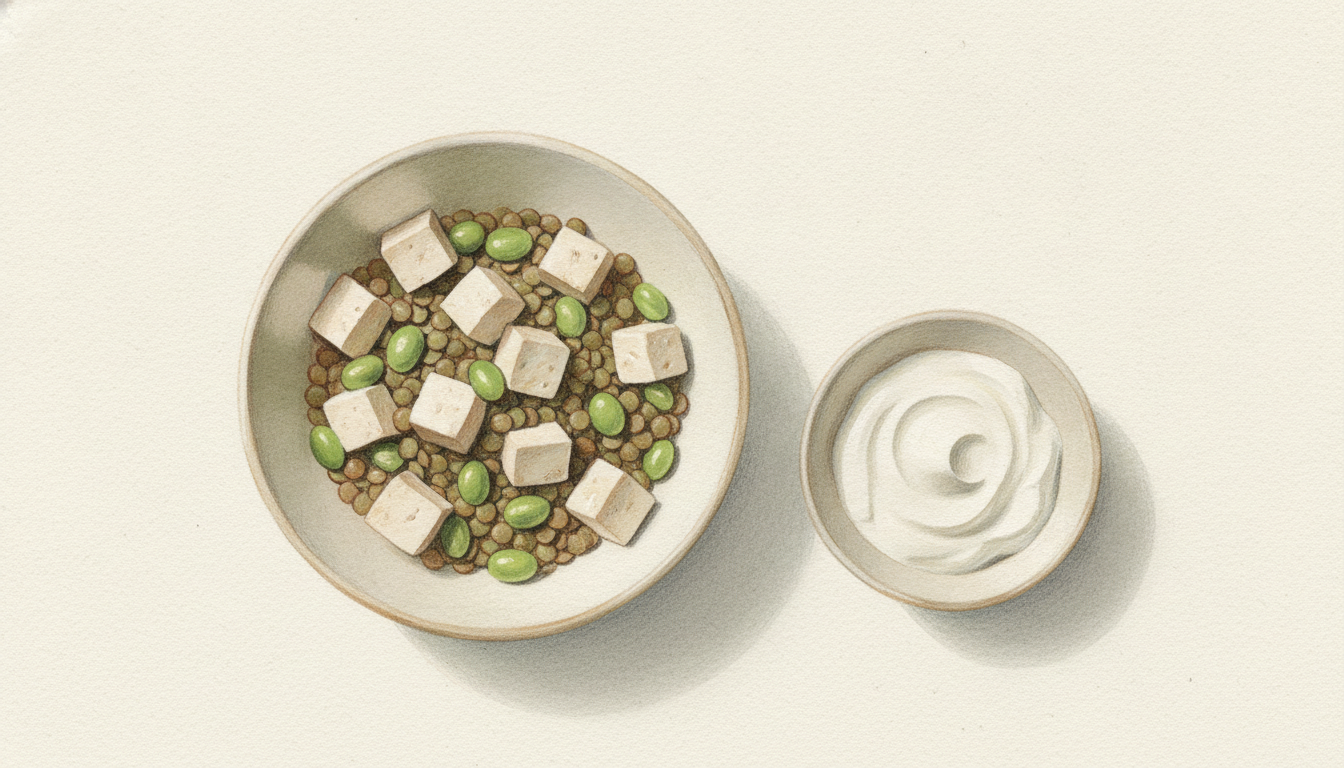
Vegetarians get enough protein by leaning heavily on soy (tofu, tempeh, edamame), beans, lentils, dairy, and eggs. Aim for roughly 1.2-1.6 grams per kilogram of body weight daily, and combine diverse sources across your meals to cover all essential amino acids.
- 1.2-1.6 g/kgDaily protein target
- 20-40 gProtein per meal
- Firm Tofu100 g9 g
- Greek Yogurt100 g plain10 g
- Lentils1/2 cup cooked9 g
- Large Egg16 g
- Edamame1/2 cup shelled, cooked11 g
- Peanut Butter1 tbsp4 g
Your Go-To Protein Powerhouses
When you're figuring out how to get protein without meat, soy products are your MVP. Tofu, tempeh, and edamame are complete proteins, meaning they offer all nine essential amino acids your body needs. A 100g serving of firm tofu packs around 9 grams of protein. These are easy, versatile, and should be daily staples.
Don't forget dairy and eggs if you include them. Greek yogurt (around 10g per 100g) and cottage cheese are packed with protein. Eggs are a classic for a reason, with about 6 grams per large egg, also a complete protein.
The Smart Combo Play
Beans, lentils, nuts, and seeds are fantastic sources of plant based protein, but many are "incomplete" on their own – they might be lower in one or two essential amino acids. The good news? You don't need to combine them perfectly in every single meal. Just make sure you're eating a variety of these sources throughout your day.
Think rice and beans, whole-wheat toast with peanut butter (4g per tbsp), or a big lentil soup with some whole-grain bread. Your body is smart; it'll piece together the amino acids from different foods eaten over several hours.
Why More is Better (Sometimes)
Plant proteins can sometimes be a bit less digestible or have a slightly lower concentration of key amino acids like leucine compared to animal sources. That's why, as a vegetarian, aiming for the higher end of the protein recommendations – around 1.2 to 1.6 grams per kilogram of body weight daily – is a smart move.
Spread your protein intake across the day, targeting 20-40 grams per meal. This helps maximize muscle protein synthesis and keeps you feeling full. Don't just load up at dinner; make sure breakfast and lunch are also robustly protein-packed.
Remember: Lean on soy, vary your plate, hit your target.
Want to know how much protein is actually on your plate? Snap a photo and the free Protein Check estimates the protein and leucine in seconds — no signup.
What are complete protein sources for vegetarians?
Complete proteins contain all nine essential amino acids. For vegetarians, these include soy products like tofu, tempeh, and edamame. Dairy (milk, Greek yogurt, cottage cheese) and eggs are also complete protein sources.
Do vegetarians need to combine proteins at every meal?
No, you don't need to combine different plant proteins at every meal to get all essential amino acids. Your body maintains an 'amino acid pool' and can combine them from various foods eaten throughout the day.
How much protein do vegetarians need daily?
Vegetarians should aim for a slightly higher protein intake than meat-eaters, typically 1.2 to 1.6 grams per kilogram of body weight daily. This helps account for potential differences in digestibility and amino acid profiles of plant proteins.
Sources
- USDA FoodData Central — protein values for foods
- MedlinePlus (U.S. National Library of Medicine) — Dietary proteins
Written by Raj Lakhani, who builds Protein Check. Researched with AI assistance and fact-checked against the public, authoritative sources listed above — see how these guides are made. General information, not medical or dietary advice. Numbers are estimates; talk to a professional for advice specific to you.