Protein Check/learn/protein rich foods
What foods have the most protein?
By Raj Lakhani · Published June 14, 2026 · 1 min read
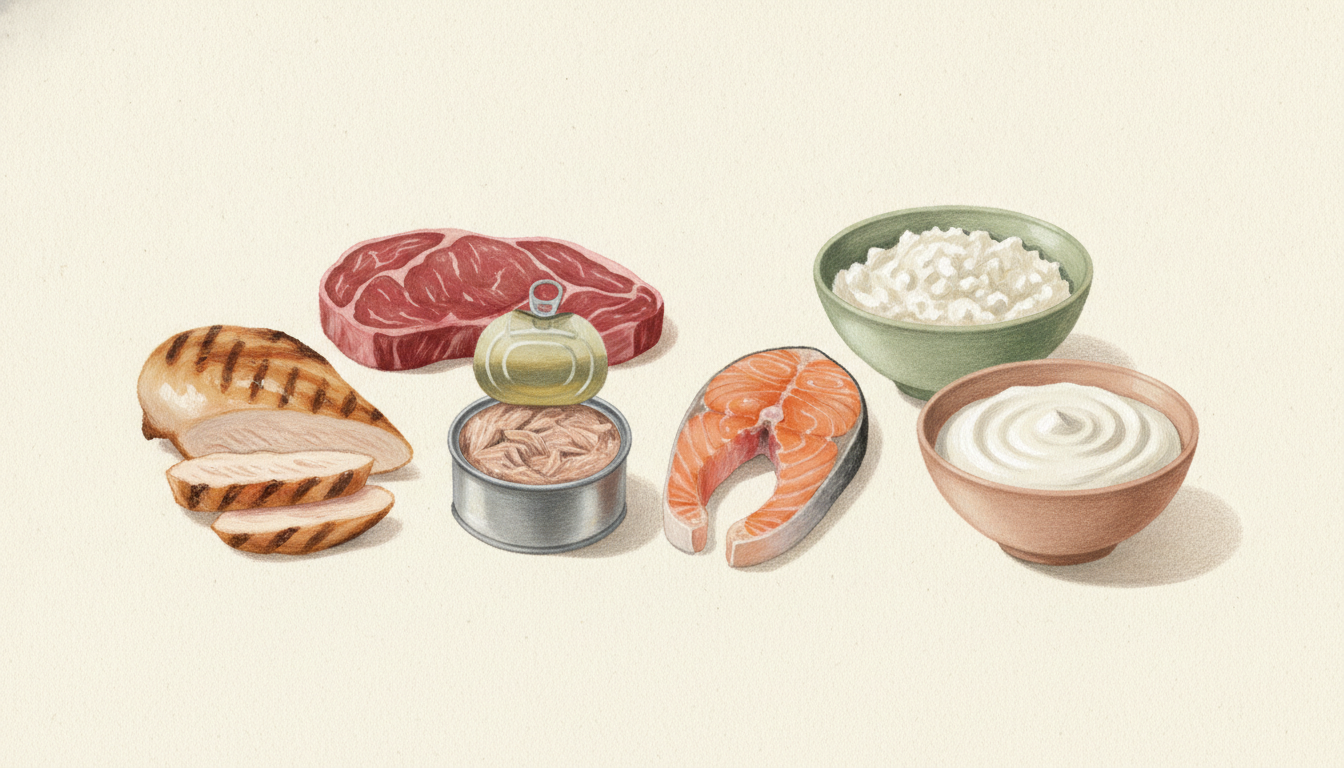
Chicken breast, lean beef, tuna, salmon, Greek yogurt, cottage cheese, and eggs provide 20-35 grams of protein per standard serving. Lentils and tofu offer 12-18 grams.
- 20-40 gProtein per meal
- ~1.6 g/kg/dayProtein for muscle
- Chicken Breast4 oz cooked (113 g)35 g
- Lean Beef4 oz cooked (113 g)30 g
- Tuna (canned in water)4 oz drained (113 g)30 g
- Salmon4 oz cooked (113 g)28 g
- Cottage Cheese (low-fat)1 cup (226 g)25 g
- Greek Yogurt (plain, nonfat)1 cup (226 g)23 g
- Eggs3 large18 g
- Lentils1 cup cooked (198 g)18 g
- Firm Tofu (extra firm)4 oz (113 g)12 g
Why these numbers matter
Target 20-40 grams of protein per meal for muscle building and satiety. For overall health and muscle, aim for 1.6 grams of protein per kilogram of body weight daily.
Protein Quality & Variety
Animal sources (chicken, beef) provide complete proteins with all essential amino acids. Plant-based options (lentils, tofu) are excellent but often incomplete; combine them throughout the day for a full amino acid profile.
Remember: Pack more protein per bite, feel better longer.
Related guides
Want to know how much protein is actually on your plate? Snap a photo and the free Protein Check estimates the protein and leucine in seconds — no signup.
What are the highest protein foods for vegetarians and vegans?
Vegetarians: Greek yogurt, cottage cheese, eggs. Vegans: firm tofu, tempeh, lentils, beans, edamame.
How much protein do I actually need daily?
Most active adults aiming for muscle growth or retention should target about 1.6 grams of protein per kilogram of body weight daily. For a 150-pound person, that's around 109 grams. Spread it out across your meals.
What are some quick, high-protein snack ideas?
Hard-boiled eggs, Greek yogurt, cottage cheese, almonds, jerky.
Sources
- USDA FoodData Central — protein values for foods
- MedlinePlus (U.S. National Library of Medicine) — Dietary proteins
Written by Raj Lakhani, who builds Protein Check. Researched with AI assistance and fact-checked against the public, authoritative sources listed above — see how these guides are made. General information, not medical or dietary advice. Numbers are estimates; talk to a professional for advice specific to you.